
A utility can deliver the energy (or water), record the consumption, send the customer a bill, and still fail to collect the full value of what has been delivered.
Very often, this is the reality behind revenue assurance.
When I first started looking more closely at revenue assurance in utilities, I associated it mainly with billing accuracy. Is the meter reading correct? Did the utility billing system calculate the right amount? Was the invoice issued?
The deeper I got into utility operations, the more I realized that this definition was far too narrow.
Revenue can disappear at almost every point in the meter-to-cash journey.
A meter can be mapped to the wrong customer or contract. Consumption data can arrive late or incomplete. A tariff can be configured incorrectly. A price change can fail to propagate to every account. And so on. The list is long.
None of these necessarily look dramatic on its own.
At scale, however, they become a financial problem because by the time a utility company realizes that something is financially wrong, the opportunity to prevent it may already have passed.
What Is Revenue Assurance in Utilities?
I think the simplest definition is:
Revenue assurance in utilities is the discipline of making sure that the economic value associated with energy or water consumption is correctly measured, calculat,ed, billed, collected and ultimately represented financially.
As you can see, this makes it much broader than billing.
If you think about the commercial journey, you can notice that are many different points for something to go wrong.
Consumption → Validation → Rating → Billing → Payment → Reconciliation → Financial reporting
Every handoff creates an opportunity for things to turn out badly.
For electricity and gas retailers, complexity grows even greater when you add interval consumption, market data, contract-specific pricing, standing charges, taxes, discounts, adjustments, estimated readings, switching, settlements, and increasingly dynamic tariffs.
Here is the thing. Utilities have never had access to more data than they do today. And their billing engines can work exactly as designed, and still lose revenue because the data entering it is wrong.
That distinction matters.
The numbers show why this deserves attention
Most utility transactions work correctly. But “most” is not necessarily good enough when millions of transactions are involved.
Ofgem’s 2026 assessment of domestic energy billing in Great Britain found that 81% of bills were based on actual meter readings when first issued, increasing to 89% after reconciliation.
It also found that suppliers had written off more than £172 million in charges for almost one million customers under back-billing protections.
That doesn’t mean all £172 million was caused by poor billing. Back-billing protections exist for good reason. But the figure illustrates something important: when billing and reconciliation problems remain unresolved for long enough, recovering legitimate revenue can become considerably more difficult.
There is another side to the problem too.
In 2025, Ofgem announced that ten energy suppliers had paid £7 million in refunds and compensation to more than 34,000 customers after a technical issue resulted in overcharging.
Revenue assurance, therefore, isn’t simply about finding underbilling, but about preventing overbilling.
Revenue assurance is not the same as collections
If a customer receives a correct $1,000 invoice and does not pay it, that is principally a collections problem.
If the customer should have received a $1,000 invoice but receives $900 because of an incorrect tariff configuration, that is a revenue-assurance problem.
If the customer receives $1,100 because of a billing defect, that is also a revenue-assurance problem.
The important point is that revenue assurance operates in both directions.
Underbilling creates lost revenue.
Overbilling creates customer detriment, correction costs, regulatory exposure, and reputational risk.
A mature revenue-assurance capability therefore should not be designed simply to “find more revenue.” Its role is to find the difference between what should have happened financially and what actually happened.
The Structural Problem: Meter Data Is Fast. Financial Truth Is Late.
What we often see is a growing gap between operational data and financial visibility.
The utility industry has invested heavily in improving the speed of operational data. Smart meters can provide near-real-time consumption signals.
However, raw consumption alone does not explain business performance. Cost, revenue, and profitability are often understood much later, after billing, reconciliation, or financial close.
This gap is one of the central ideas behind our work on moving from energy consumption data toward financial truth.
More data has not necessarily created more certainty
This is a particularly important point for CIOs.
Utilities often assume that modernizing data acquisition will naturally improve commercial control.
It definitely helps, but it does not solve the problem on its own.
Receiving a meter reading every 15 minutes, like in the EU or every 30 minutes, like in the UK, instead of once a month does not create revenue assurance if it still takes weeks to determine what that consumption means commercially.
In fact, the utility can end up in an uncomfortable situation: operational visibility improves while financial visibility remains delayed.
The business knows more about what its assets and customers are doing, but finance still waits for downstream processes to establish what those events mean for revenue and margin.
That is why we increasingly think in terms of meter-to-margin, not simply meter-to-cash.
From meter-to-cash to meter-to-margin
This distinction matters especially in energy retail, where knowing how much has been consumed is only part of the picture. The real value comes from being able to connect that consumption to expected revenue, cost, and margin while the billing period is still open.
When those calculations are available earlier, teams have more time to spot issues such as missing or estimated consumption, incorrect ratings, unexpected cost movements, or margin decline before they are locked into an invoice.
The point is to shorten the gap between what is happening operationally and when the business understands the financial impact.
In practice, that means bringing consumption, rating, costing, revenue assurance and expected P&L closer together, so exceptions can be identified and investigated before month-end rather than discovered afterwards.
At Methodia, this is something we’ve been working on for the last couple of years, largely because we’ve seen firsthand how difficult it can be for utilities to connect operational activity to its financial impact.
1. Start with consumption you can trust
Everything starts with meter data.
But having consumption data and being able to trust it are two different things.
Before we can talk about revenue or margin, we need to understand what has actually been consumed and, just as importantly, what we don’t know yet.
That means distinguishing between actual, expected, missing, interpolated, and estimated consumption across individual meters, sites, customers, or an entire portfolio.
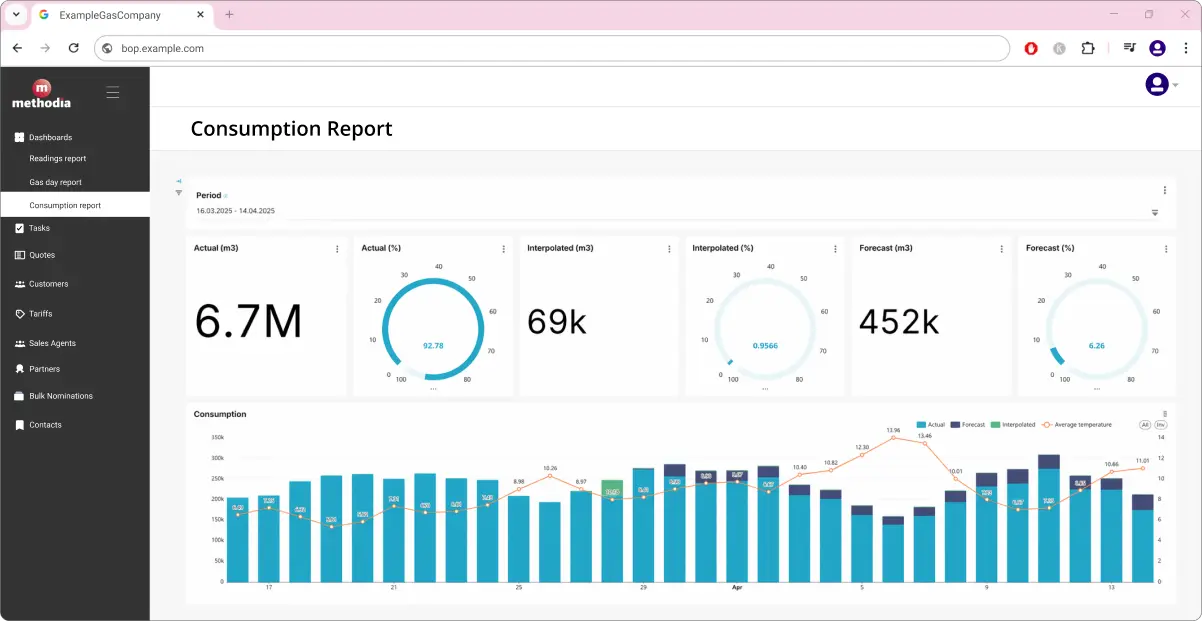
This provides more than a view of usage. It gives teams visibility into the completeness and quality of the data that will eventually drive the financial process.
If a reading is missing, late, or significantly different from the expected pattern, the issue can be identified while the billing period is still open.
Where necessary, estimated consumption can temporarily fill that gap and keep its potential commercial impact visible while the underlying issue is investigated.
2. Give consumption a commercial value
Once we understand the consumption, the next question is relatively simple:
What is it worth?
This is where live rating and costing come into the picture.
Consumption needs to be connected to the relevant tariff, contract conditions, charges, costs, and other commercial rules. Methodia continuously turns that consumption into rated values and associated costs, creating an evolving financial picture as the month progresses.
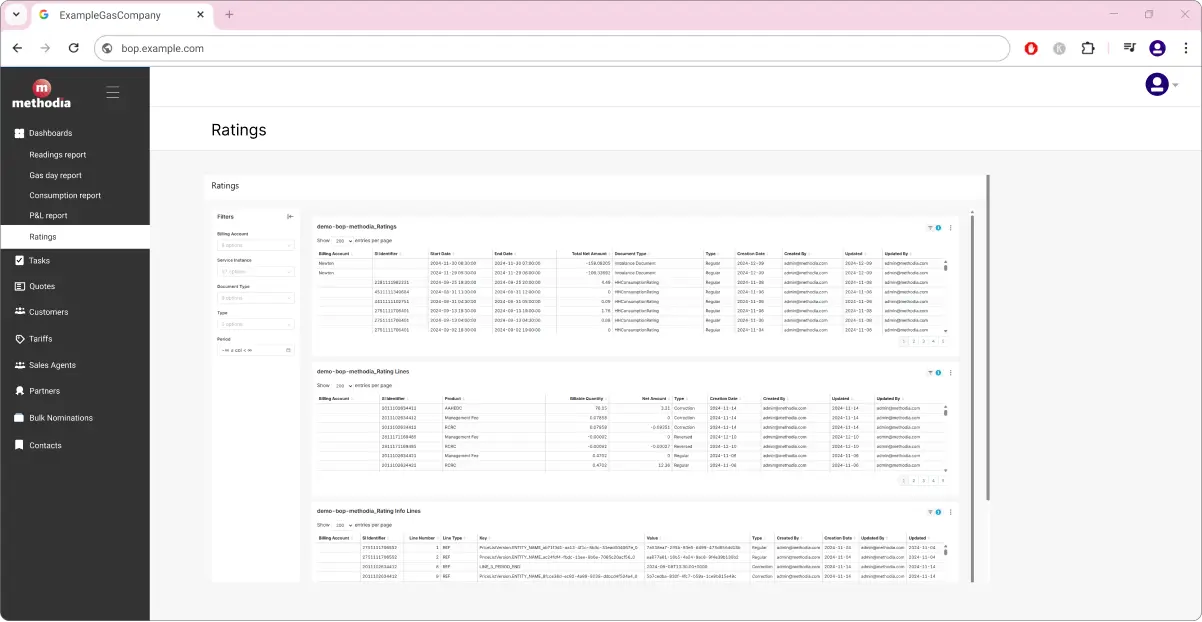
This is an important shift.
Instead of waiting until the end of the billing cycle to understand the commercial result, teams can start seeing what the accumulated consumption means financially much earlier.
Billing-ready results can still be produced at the appropriate point. But the underlying calculation doesn’t have to remain invisible until the invoice is generated.
3. Look for the difference between what should happen and what is happening
This is where revenue assurance becomes part of the model.
Once expected consumption and commercial value are visible, we have something to compare actual performance against.
· Are readings missing?
· Are we relying heavily on estimates?
· Has consumption been rated correctly?
· Is an expected charge missing?
· Is the financial value materially different from what we would expect for this customer, meter, or site?
Not every exception represents lost revenue. That is important.
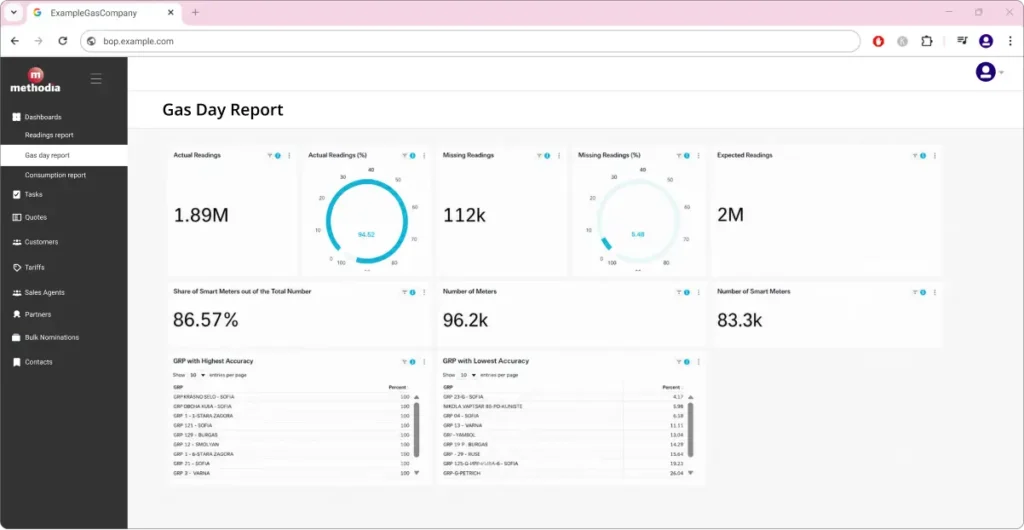
The objective is to identify the discrepancies that could have a financial impact, understand why they are happening, and give teams enough time to investigate them before they become billing problems.
For me, that last part is critical.
Finding an error after an invoice has been issued is useful. Finding it before the invoice exists is much more valuable.
4. Build an earlier view of expected margin
The final layer connects revenue with cost.
If we know how much has been consumed, what that consumption should generate in revenue, and what the associated costs are, we can begin to build an expected P&L before the month is closed.
It gives the business an early indication of where margin is heading while there is still time to understand what is driving it.
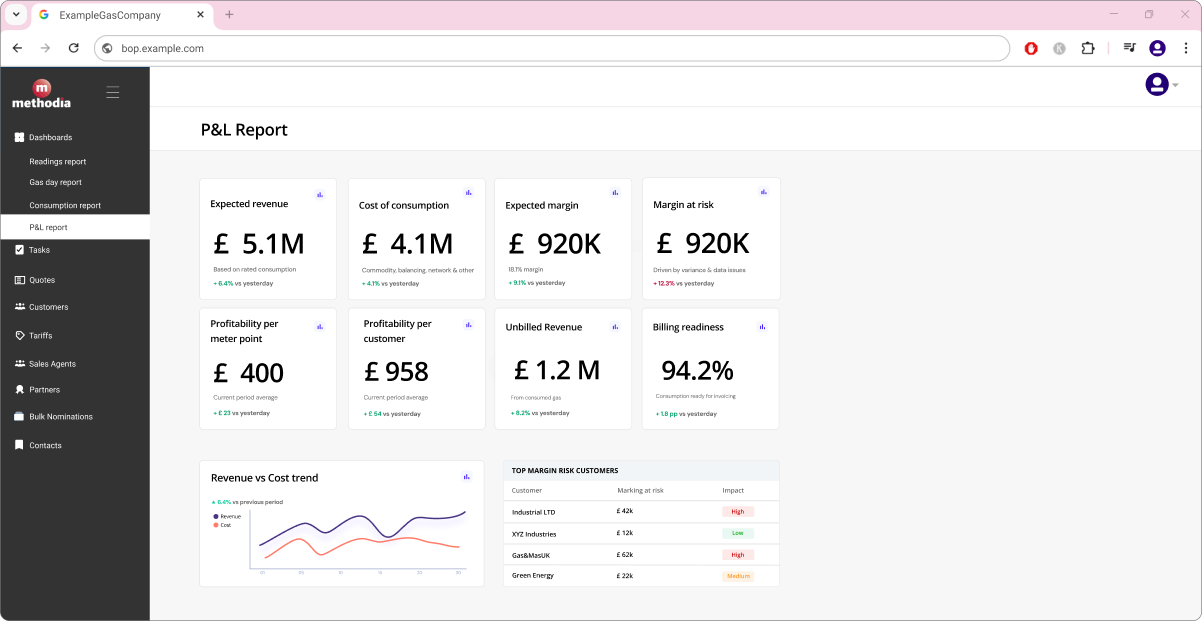
That view can be built at different levels: a meter, a site, a customer, a contract, or across a wider portfolio.
And this is where I think meter-to-margin becomes particularly useful.
We are no longer looking at consumption, billing, revenue assurance, and profitability as separate processes that eventually meet somewhere in financial reporting.
We are connecting them as the underlying activity happens.
Meter data → Consumption → Rating & Costing → Revenue Assurance → Expected P&L
The closer these stages become, the shorter the distance between an operational event and understanding its financial consequence.
And ultimately, that is the idea behind meter-to-margin: not waiting for the end of the financial process to understand the economics of what has already happened.

Learn how Methodia connects consumption, rating and costing, revenue assurance, and projected margin to give utility teams earlier visibility into financial performance.

