The utility business used to be simple: produce, distribute, bill, repeat.
Now you’re operating in a world of volatile demand, electrification, distributed energy resources (DERs), regulatory pressure, aging assets, and demanding customers.
On top of that, AI is changing the economics of both running the grid and selling power to the data centers that train the AI models.
That’s the part many people miss. AI isn’t only a technology trend you may or may not adopt. It’s also becoming a demand driver that is already reshaping load growth and grid planning. The International Energy Agency’s outlook projects that data center electricity demand could increase 3 times by 2030.
So the real question for CEOs and CIOs isn’t: Should we try AI?
It’s: Where does AI create measurable operational value, and what do we need in place to scale it safely?
Before we move to the use cases that move needle, I want you to carefully read this.
According to a resent research called the Utility innovation survey 96% of respondents indicate that AI is currently a strategic focus. So far so good.
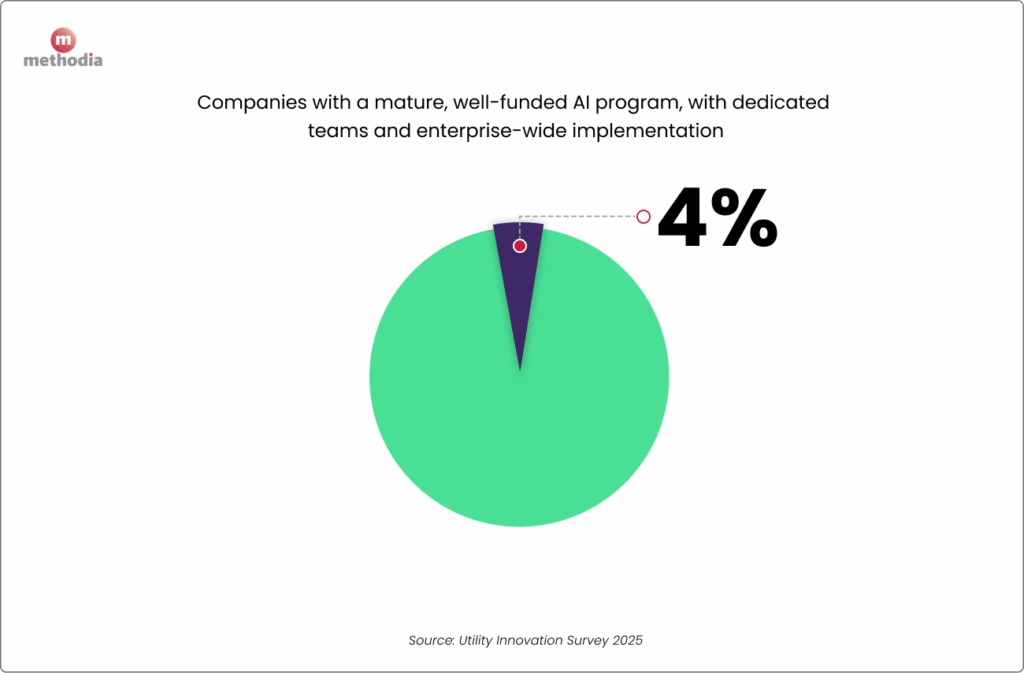
Pay attention here. However, only 4% suggest their companies have a mature, well-funded AI program, with dedicated teams and enterprise-wide implementation.
Let that sink in. This means there is a huge opportunity out there and the ones who realize this fast and act on it will be the ones to win the long term game.
Now, let’s move to the use cases.
Use Case #1: Predictive Maintenance and Asset Failure Prevention
Utilities don’t need more dashboards. They need fewer outages, fewer catastrophic failures, and better justification for CAPEX (capital expenditure).
When it comes to asset management AI can help with:
- – detecting early failure signals (transformers, switchgear, pumps, pipes)
- – prioritizing maintenance based on risk (not just age)
- – preventing repeat failures by learning from patterns
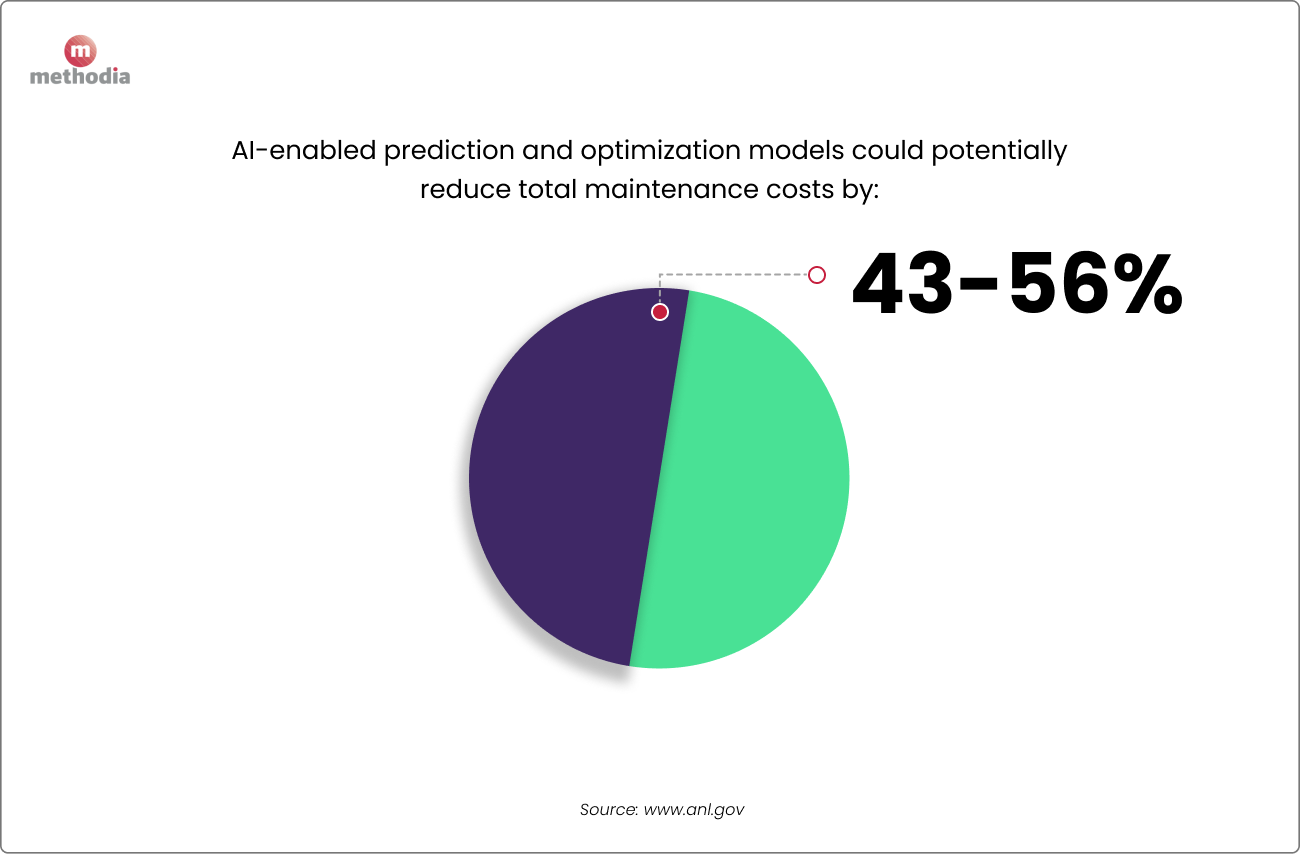
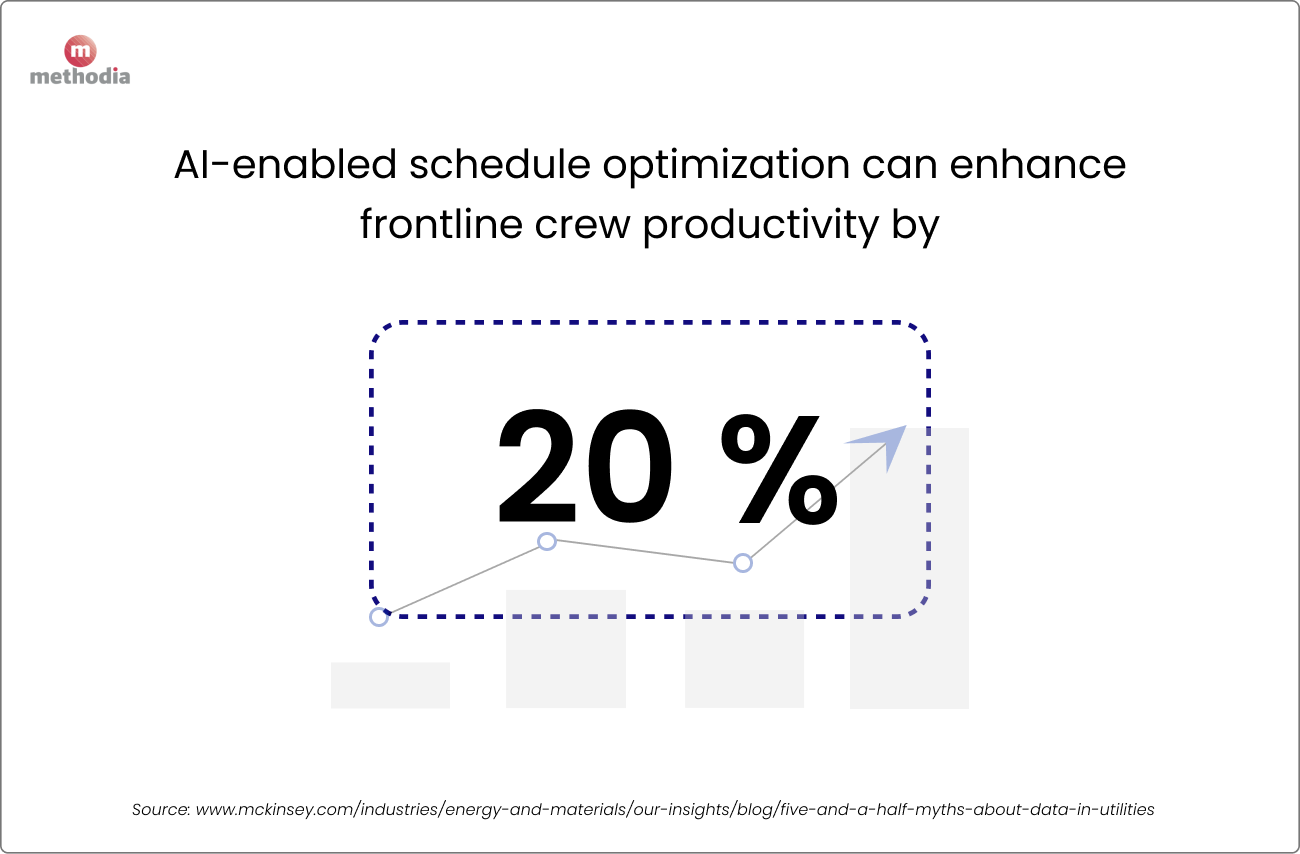
McKinsey points out that AI-enabled schedule optimization can enhance frontline crew productivity by 20 %, while preventative maintenance can bolster grid resiliency and reliability by up to 25 %.
What this looks like in practice:
- – sensor + SCADA + maintenance history = failure probability models
- – condition-based maintenance scheduling
- – risk-based investment plans that are explainable to regulators and boards
Use Case #2: Field Workforce Scheduling and Dispatch Optimization
This one is underrated because it sounds too operational. But it’s one of the cleanest ROI cases in the entire utility stack.
Just think about it. For example, AI-driven schedule optimization helps reduce:
- – travel time
- – missed appointments
- – idle time between jobs
- – repeat truck rolls caused by poor assignment decisions
As mentioned in the previous section that AI-enabled schedule optimization can enhance frontline crew productivity by 20 %.
And this translates into outcomes that both executives and customers care about:
- – higher productivity
- – faster restoration and service response
- – reduced overtime
Use Case #3: Outage Prediction, Faster Restoration, and Grid Operations Support
Everyone wants self-healing grids. The reality however is more incremental and still valuable.
AI supports grid operations when it helps you:
- – predict fault likelihood based on weather + load + asset condition
- – identify probable fault location faster
- – prioritize restoration actions based on customer criticality (hospitals, critical infrastructure)
- – improve switching plans and crew deployment during major events
The value is not just faster restoration. It’s better decisions under pressure, when humans are overloaded and time is expensive.
Use Case #4: Demand Forecasting, Flexibility, and Load Management
Here’s the uncomfortable truth: many demand forecasts were built for a slower world.
Now load is being reshaped by EVs, electrified heat, industrial electrification, and increasingly by AI-driven data center demand. IEA predicts data center electricity consumption to double by 2030.
This is where AI matters:
- – short-term load forecasting (minutes to days) for operations
- – medium-term forecasting (months) for procurement and scheduling
- – long-term scenario forecasting (years) for grid planning
And as AI training workloads contribute to peak demand pressure, planning has to account for a future where peaks grow faster than many plans assumed.
Use Case #5: Customer Service Automation and Proactive Communication
Let me tell you something. If you want customers to trust you during an outage, “We’re investigating” doesn’t cut it anymore.
You have to roll up your sleeves and get that GenAI works for you and your clients really fast, because:
- – summarize customer interactions and service history instantly for agents
- – auto-draft responses and standard communications (with human review)
- – route contacts more intelligently (intent + urgency + customer type)
- – reduce call volume with proactive notifications
Furthermore, this is one of the most realistic and easy-to-deploy GenAI areas because the workflows are clear, the data is text-heavy, and the risk can be controlled through approval steps and retrieval-based grounding.
Use Case #6: Compliance Reporting, Audit Readiness, and Explainable Operations
We got it: utilities don’t get to experiment like consumer tech companies. You operate inside regulatory scrutiny.
Here is why AI doesn’t replace accountability. It supports it.
In this use case scenario AI can help by:
- – automating evidence collection (work orders, inspections, timestamps, photos)
- – flagging non-compliance risks earlier (SLA breaches, missing steps, inconsistent records)
- – accelerating reporting cycles without degrading audit trails
Use Case #7: Knowledge Copilots for Engineers and Operators
This is where GenAI gets real for utilities. If you do it properly of course.
A well-designed internal copilot (grounded in your approved documentation) can help:
- – field crews find procedures, safety steps, and asset history fast
- – engineers search standards and internal policies without digging through folders
- – call center agents answer consistently (and escalate correctly)
The key here is the architecture: you don’t want a chatbot that improvises. You want a system that retrieves the right internal source and keeps humans in control.
What Usually Kills AI Programs in Utilities
Let’s be blunt. Most AI initiatives don’t fail because the model isn’t smart enough. They fail because internal reasons. And the faster we realize this the faster we can solve the problems with implementing AI-driven solutions.
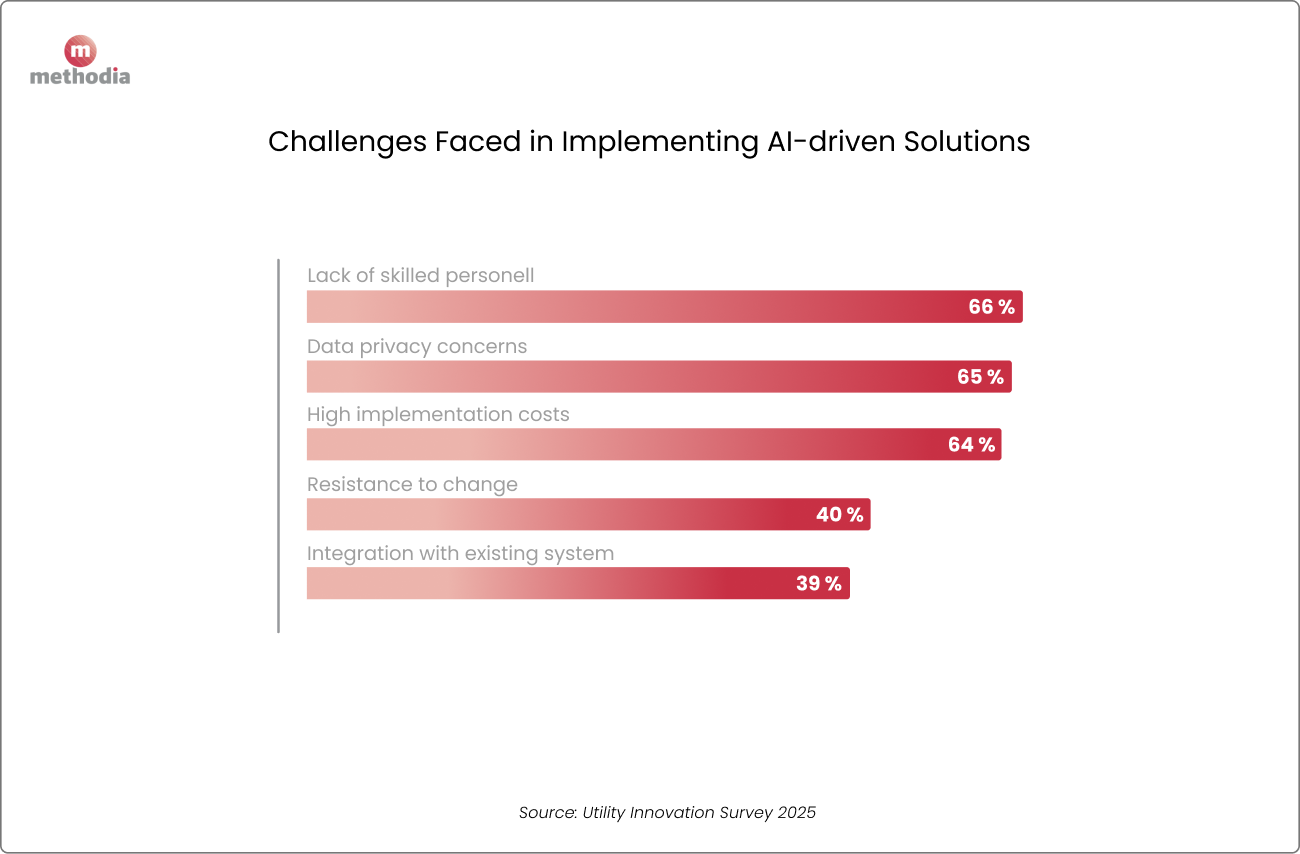
The biggest challenge here is the talent gap. Here are the top 5 challenges according to the Utility Innovation Survey:
- – Lack of Skilled Personnel
- – Data Privacy Concerns
- – High Implementation Costs
- – Resistance to Change
- – Integration with Existing Systems
This means one thing: if you’re serious about implementing AI, you need a strategy and a plan with real, executable steps.
💡 Is your utility company prepared for the future? Now is the time to modernize and optimize for long-term success. Methodia is here to help.