
Across the energy and utilities industry, smart meters are now the norm, not the exception. Every day, they generate huge volumes of granular consumption data. In parallel, customers expect a digital‑first service experience: accurate bills, proactive alerts, personalized offers, and simple self‑service.
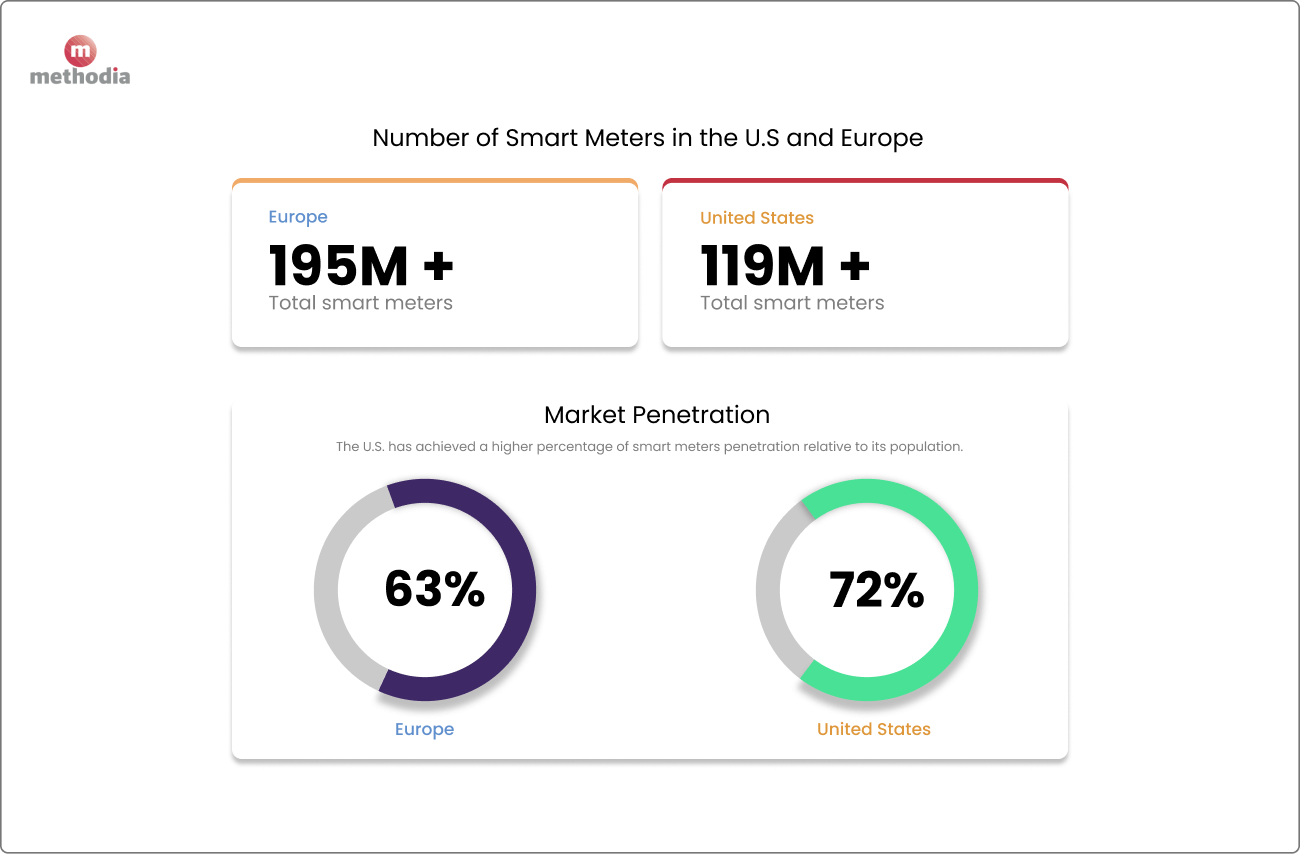
According to Enlit, about 63% of Europe’s electricity consumers had smart meters. For the U.S., these numbers go up to 73%.
Here is the thing. Most retailers and suppliers already have two core systems in place:
A meter data management system (MDMS) that collects, validates, and stores interval data.
A customer relationship management (CRM for utilities) platform that tracks contracts, communications, and service interactions.
However, there is a “small” problem. In many organizations, these systems barely talk to each other. Meter data lives on the operations side; customer data lives on the commercial side. As a result, you get:
From Readings to Relationships: Why Meter Data Belongs in CRM
Traditionally, meter data management has been treated as an operational function: validate reads, estimate where necessary, and feed billing.
But customers don’t think in terms of reads and estimates. They think in terms of: Is my bill correct? Can I understand and control my consumption? Are you treating me fairly compared to others like me?
To answer those questions, your commercial teams need direct, contextual access to meter data inside the systems they use every day.
Having said that a customer‑centric meter data management approach allows you to:
– Anchor every reading to a customer relationship, not just a meter point.
– See consumption history alongside contracts, products, and interactions (complaints, calls, emails, portal activity).
– Trigger actions and workflows based on actual behavior, not just static master data.
In short, you move from “we store meter data for billing” to “we use meter data to understand and serve customers better.”
What Is a Meter Data Management System? (That Really Helps You Navigate Operational And Regulatory Complexity)
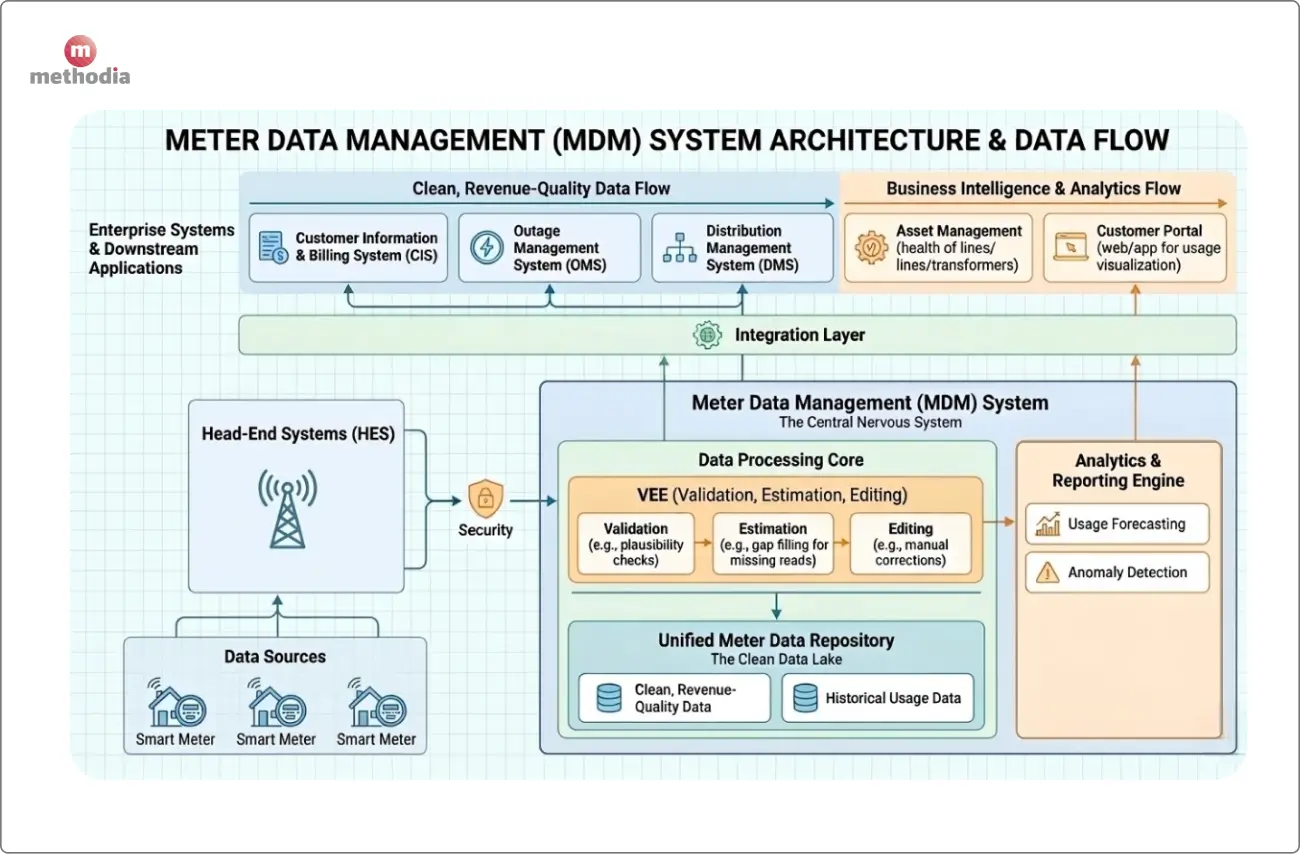
A Meter Data Management system is a centralized, software platform that collects, validates, stores, and analyzes high-volume, interval-based consumption data from smart meters.
So far so good.
However, you need something better to cover the rising customer expectations. A system that combines the strengths of CRM and MDMS into a single, integrated platform.
MDM System Core Capabilities You Have to Look For
When you think about modern CRM‑enabled meter data management, several capabilities are particularly important.
1. Single Source of Truth for Customer & Meter Data
1. Consolidate contracts, products, and tariffs with corresponding connection points and meters.
2. Keep track of lifecycle events, new connections, disconnections, switching, and meter changes without losing history.
3. Ensure that every internal user and channel works from the same validated consumption figures.
This is the foundation for trustworthy bills and credible conversations with customers.
2. Consumption‑Aware Customer Service
3. Personalized Products and Offers
4. Proactive Alerts and Exception Management
5. Support for Omnichannel Journeys
Business Outcomes for Utilities and Energy Retailers
The value of investing in CRM‑centric meter data management shows up across multiple dimensions.
Fewer Billing Disputes and Complaints
When customers and agents can see the same validated data, it’s much easier to explain why a bill looks the way it does. That leads to:
Fewer disputes reaching formal complaint channels.
More issues resolved in a single interaction.
Less back‑and‑forth between front office and back office.
Higher Customer Trust and Retention
Transparency around usage and cost, combined with proactive alerts and tailored offers, builds trust over time. Customers who feel understood and supported are more likely to stay, even in competitive switching markets.
Leaner, More Efficient Operations
Integrating CRM and meter data reduces manual work and data reconciliation:
Fewer ad‑hoc reports are created just to answer individual questions.
Less time spent copying data between systems or searching for the “right” version.
Clearer ownership of tasks and workflows, with tracking from start to finish.
Stronger Foundation for Innovation
Many new business models in energy, like time‑of‑use tariffs, bundled services, prosumer offerings, depend on granular meter data and flexible customer processes. A CRM meter data management system gives you the data, structure, and agility to experiment without rebuilding your core.
How Methodia Fits into the Picture
While every utility has its own landscape and constraints, the direction of travel is clear: closer alignment between customer processes and meter data. That’s where we at Methodia focus on.
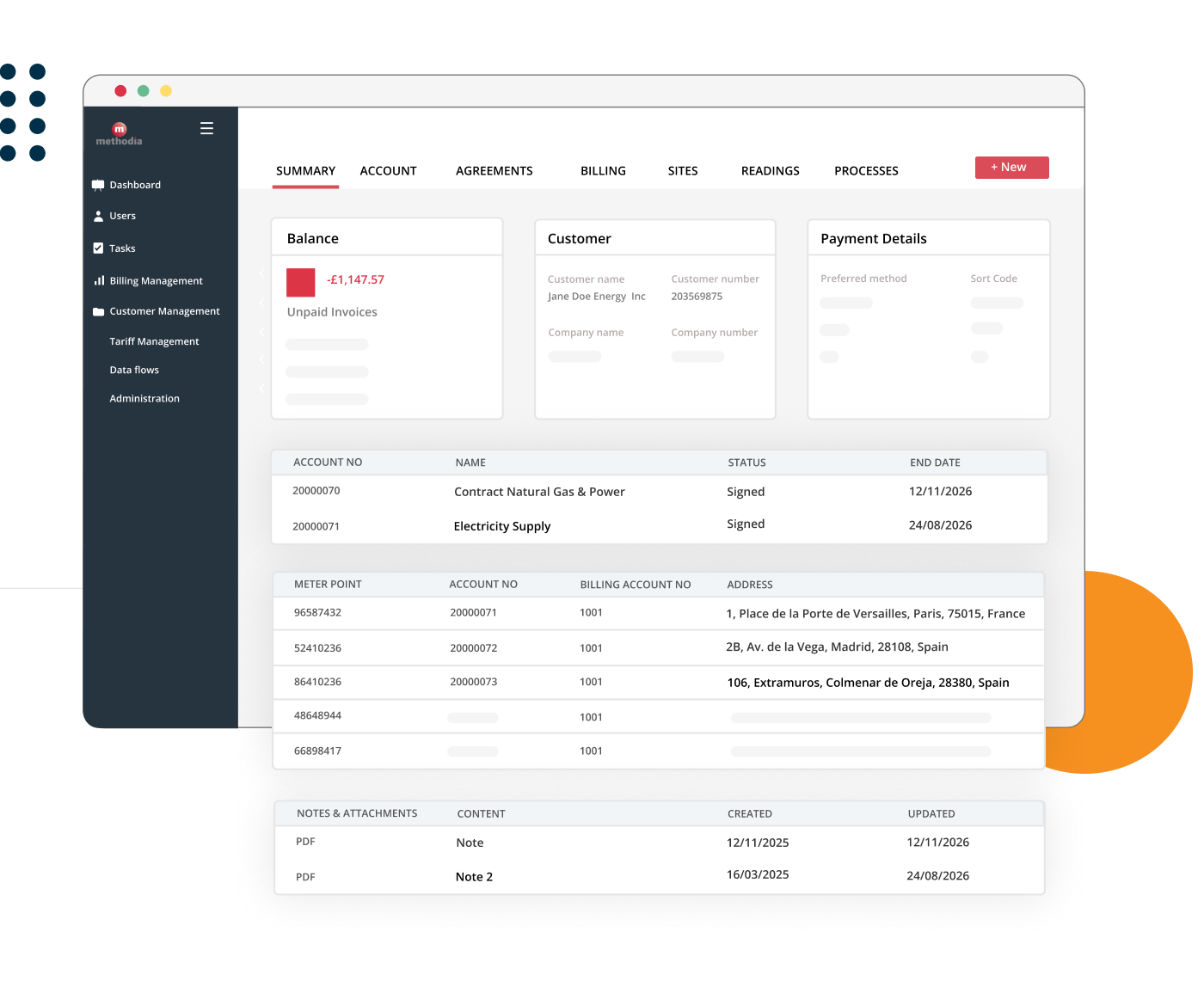
Helping energy and utility retailers unify CRM, billing, and operational data so they can:
– Launch products and tariffs faster.
– Reduce friction in customer journeys.
– Use meter data as a strategic asset, not just a billing input.
Even when you start with a specific use case, such as resolving billing disputes more efficiently or enabling better self‑service, the same foundation can support future initiatives around flexibility services, bundled offerings, or sustainability insights.

💡 Is your utility company prepared for the future? Now is the time to modernize and optimize for long-term success. Methodia is here to help.


